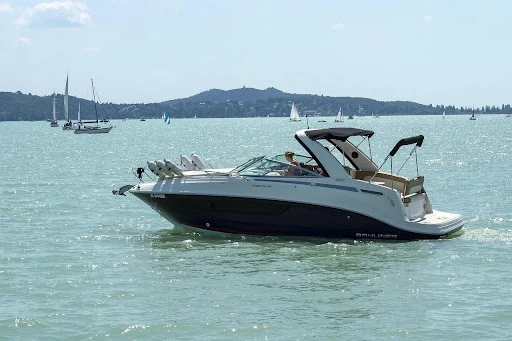
There are several things to consider before taking the leap you've dreamed about and purchasing a boat. Simplify the process by using this boat buying guide to help you find the perfect boat for your needs and budget.
Start by defining the boating lifestyle you have in mind and which types of boat fit what you want to do. Calculate your initial and ongoing costs, and remember to determine if you have a place to store your boat properly. Plan to protect your new asset with an extended warranty to guard against unexpected, and potentially significant, out-of-pocket expenses.
In This Guide:
Step 1: Define Your Boating Lifestyle
How you plan to use your boat affects the size, speed, and capabilities it needs. Ask yourself key questions to determine what type of craft you want, including:
- What will you use the boat for? Fishing, sports, cruising, and taking day trips require different types of boat.
- Who will you have on board? Whether you plan to boat solo, with a partner, or while hosting groups — and whether you plan to bring children — affect the size and features of the boat you'll need.
- Where will you be boating? Determine if you plan to use your boat on lakes, rivers, bays, or the open ocean. Some boats are only suitable for specific uses and areas.
Answering these questions will start narrowing down your options, so you don't make a significant financial investment in a boat that you'll rarely use.
Step 2: Understanding Boat Types
Once you understand how you want to use your boat, consider how to choose a vessel based on your needs. Make a checklist of the pros and cons of types of boats so you can determine how much each impacts your choice.
Pontoon Boats
Pontoon boats are floating platforms with aluminum tubes, a body, and motor power. They can travel in shallow water, and have spacious deck areas that allow for multiple passengers plus supplies such as coolers, chairs, and equipment. People generally choose pontoon boats for entertaining and cruising.
Pontoon boats aren't built for speed or long distances. They aren't safe in rough water, and can also be difficult to handle compared to other watercraft, especially in poor weather. Pontoon boats cost from $15,000 to $40,000, depending on size and amenities.
Bowriders or Runabouts
Bowriders, often called runabouts, are power boats with a V-shaped bow designed to cut through the water. Bowriders are versatile and suitable for water sports and day cruising. They can handle waves on large lakes and coastal waters, can often reach up to 60 mph, and can handle sharp turns. Some bowriders have significant storage below deck for water skis and other equipment.
Bowriders are best used in clear weather because they don't have enclosed cabins. Their V shape usually means less deck room, so they are generally only suitable for carrying a few people. Unless you buy a large bowrider, they're also not powerful enough for the choppy waters of the open ocean.
Prices for bowriders vary widely. You can often find a small, used bowrider for less than $10,000, but larger, newer models without cabin space can run up to $100,000 or more.
Fishing Boats
There are several types of fishing boats for freshwater and saltwater use. Some are designed for shallow water, while others are meant to handle the rough waves of the ocean. Specialized fishing boats offer space to keep equipment or even live catch. Other fishing boats are versatile and also suitable for other recreational purposes.
However, unless you can afford a large fishing boat, yours will have limited space for passengers and equipment. They're also often uncomfortable for long outings. A small fishing boat with a trailer runs from $18,000 to $45,000.
Center Consoles
A center console boat is one with the controls in the center of the deck instead of off to the right side. This makes them a popular choice for fishing and offshore use, as there is more room to stand on the periphery. Being positioned in the center of the boat gives the pilot a full range of vision. Center console boats have deep V-hulls that help them handle rough waters.
Center console boats are usually utilitarian, so they may not be a good choice if you want to spend time cruising in comfort. Seating is located only at the bow or stern, and it is generally not comfortable. There also isn't a lot of storage space.
Cabin Cruisers
For overnight trips and extended cruising, consider the pros and cons of cabin cruisers. These vessels provide cabin space for two or more people and have beds, a galley, a toilet and shower, and often other amenities. Cruisers are built for comfort, and a good choice if you plan to use your boat to travel to different destinations or spend significant time on the open water.
The size of cruisers can be a con unless you have a large budget. Sleeping and eating quarters can prove challenging for large people or more than a few guests. The cabins can also get stuffy unless you have air conditioning. Cabin cruisers are big and heavy, so you will need a marina space and will have significant fuel costs.
There is a large price range for cabin cruisers because there are many sizes and choices of amenities. A smaller cabin cruiser may cost as little as $30,000, while a larger one with top-of-the-line equipment can be up to $900,000.
Step 3: Budgeting Beyond the Purchase Price
The purchase price of your boat is only the beginning of its overall cost. There are several ongoing costs to boat ownership, and you must factor them into your budget when deciding which vessel to buy.
Storage or Mooring
Few people have the space on their own property to properly store their boats when they aren't using them. Before you make a purchase, determine where you will store it or keep it moored, and how much that will cost. A larger boat might be in your budget as a one-time expense, but still impractical due to the cost or inconvenience of storing it.
Fuel
The cost of fuel can add significantly to the cost of owning a boat, especially if you use it regularly. Depending on the type of boat you buy, you may need specific octane ratings, gas without ethanol, or a specific oil and gas mixture. Larger boats sometimes require specific additives.
Insurance
While most states do not require boat insurance, it is critical to protect your investment and your overall financial health. At minimum, you should insure your boat against liability and theft. If you choose a boat with components that are expensive to replace, consider a policy that includes damage protection.
Also, check with your bank if you have a loan for your boat, and with the marina or other storage space you use. They may require additional insurance.
Maintenance
A boat needs regular maintenance, and depending on where you live, it may need seasonal maintenance, such as winterization and spring commissioning. As a rule of thumb, plan on spending 10% of your boat's value each year on maintenance. Some key boat maintenance areas include:
- Propellor checks
- Bilge pump function
- Oil inspection and replacement
- Battery inspection and replacement when necessary
- Hose inspection
- Electrical system function
- Fuel and air filter replacement
- Lubrication
- Mechanical inspection and repair
Unexpected Repairs
Mechanical failures aren't completely avoidable even with proper maintenance, and can represent a significant and unexpected addition to boat ownership costs. Even if you are careful about maintaining your boat, you may experience prop damage, engine failure, electrical problems, or other issues that are expensive if not covered by insurance or a warranty.
Step 4: New vs. Used Boats
Consider all the pros and cons when deciding between new and used boats. A new boat, like a new car, is nice to have, but it isn't always necessary to meet your needs, and it may be out of your price range.
New Boats
There are several advantages to buying a new boat: it will come with a warranty as well as offering you the latest technology. New watercraft don't have a maintenance history to explore, and you won't need a pre-purchase inspection to verify that it is water-worthy.
However, the cost of a new boat can put it out of reach for some buyers. They also depreciate faster than used boats that have already lost some of their value. If you have to resell, you face a steeper loss from a new vessel.
Used Boats
Lower costs and slower depreciation are some of the benefits of buying a used boat. You also get the advantage of being able to view more reviews and ratings for a used boat, because they generally have a larger pool of past buyers than new boats.
It can be challenging to determine the maintenance history of a used boat. You must count on the previous owner or the dealership to have significant records, especially if the boat is more than a few years old. Used vessels are also often out of their manufacturer's warranty period, which could lead to significant repair costs if you don't protect yourself.
Step 5: The Final Steps and Protecting Your Investment
Once you decide which boat is right for you, there are additional, critical steps to take — especially before purchasing a used boat.
Pre-Purchase Inspection
Do not purchase a used boat without having a marine professional survey and inspect it first, with a focus on the engine and other mechanical parts. What seems like a good deal could quickly turn into a money pit if you need major repairs immediately, or if critical components show signs of damage or are near the end of their useful life.
The Role of a Boat Warranty
An essential layer of protection for your boat is an extended warranty that covers mechanical failures. You face significant costs and time out of the water if critical components such as the engine, transmission, or electrical system are damaged once your vessel is outside its manufacturer's warranty period.
Protection offered by America's Boat Warranty gives you peace of mind so you can focus on enjoying your time on the water. Knowing you can purchase an extended warranty can also influence your decision regarding which boat you can afford to buy and the potential ongoing costs.
Buy the Right Boat for You and Protect It
People who love to be out on the water have their dream boat, but getting one isn't always practical once you consider all the factors of buying a boat for beginners. Carefully consider how you plan to use your boat, your budget, the pros and cons of new vs. used boats, and who will enjoy it with you. Making a well-informed decision can help you enjoy your purchase and avoid buyer's remorse.
To protect your new investment, get a free quote from America's Boat Warranty. We offer extended warranty plans for a wide range of vessels, so you don't have to worry that you will suddenly face a huge financial outlay. Choose from several plans that offer a range from entry-level protection to nearly complete protection of electrical and mechanical components, such as engines, bilge pumps, and electrical systems. With your warranty set, the water awaits.
View Warranty Plans